

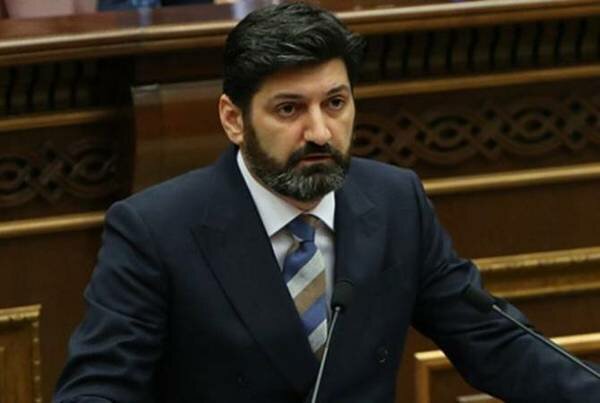
Below is the 2ns part of Vahe Grigoryan's letter,
''The Principle of the Guarantee of Tenure (Irreplaceability) for Judges
Any objections to this principle as one of the essential guarantees for the independence of the judiciary cannot be acceptable. However, this principle must be applied in line with its purpose and cannot become an instrument for the protection of the opposite. The princple of guaranteed tenure for judges is meant to protect the judges and courts (as well as other instances performing an equivalent function) from the influence of the other branches of power or other sources. In other words, this principle is meant to protect the independence of judges and courts.
This principle cannot be deemed absolute and must be subject to reasonable limitations. The application of this principle is to be ensured to the maximum extent when we speak about any likelihood of interference with the judiciary resulting from changes of the political power.
However, the constitutional amendments in 2015 were neither a process for the invertion of a political force nor a targetted process of interference with the independence of the judiciary. With the constitutional amendments of 2015 the most drastic change in the form of governance was made in the entire modern history of Armenia encompassing the whole spectrum of the executive, the legislative and the judicial powers. Moreover, these amendments led to essential changes in the formation, procedures and powers of the Court, introduction of the status of judges in the Court and bestowing a new and weightier role on the Court in the parliamentary Armenia.
Therefore, the purpose of the constituent power was to bring these amendments to life as soon as possible against which not only could the partial compromise of the principle of irreplacebility of judges not compromise the independence of the Court but along with the new amendments this principle should have been more emphasised and strengthened.
Meanwhile, the interpretation of Article 213, which formally invokes the principle of irreplaceability of judges and was applied from 6 December 2015 to 9 April 2018 rather than being regarded as an approach pursuing the aim of protecting the independence of the Court is applied in a diametrically opposite sense. The way the principle of irreplaceability of judges was invoked for the interpretation of Article 213 of the Constitution made it rather become an interference by one political party with the autonomy of the Court to elect its representative authority (guaranteed by the Constitution) and led to the postponement of the application of the model foreseen by the Constitution for about 2 decades.
Indeed, I regret that the international organisations that played an active part in the whole process of the 2015 constitutional amendments by their expertise on different matters ignored completely the political interferences done relying on the principle of irreplaceability of judges by the political authorities and their representatives with who these international organisations were in contact throughout that whole time. This may inspire profound disappointment with and well-grounded impression of political partisanship by these organisations among the Armenian public.
Thus, considering the complete change of the constitutional model when the regulations for the formation, procedures and functions of the executive, the legislature and, partially, the judiciary were radically changed, the new composition to be formed in the conditions of professional and representational diversity could somehow create a problem for the principle of irreplaceability of judges. Moreover, taking the opportunity of continuing to make use of the former constitutional procedures under the watchful oversight of international organisations and having encountered no objections on their part the political authorities of the time consolidated its leverage over the Court by appointing one of their party members to the Court and later appointing him as a Chairperson for a life tenure (until the age of 65) under the pretext of the protection of the principle of irreplaceability of judges, thus preventing us from having the model of the Court prescribed by the constituent power and arduously campaigned for by these people and the international organisations as the most effective model of the Court.
The oath sworn by me as a Judge prevents me from keeping silent about this issue either, including in its part related to the involvement of international organisations.
The Issue and the Problem of Authority of the Court
Applying the above interpretation to Article 213 of the Constitution and in the meaning contrary to the will of the constituent power and thereby deepening further the perception of the Constitutional Court as an instance dominated by one political party, this approach also has negative ramifications on the authority of the Court.
In this regard and conditioned by my status I cannot comment any further than I have already done. However, it is my request to every single recipient of this letter to keep this in mind.
I regret to note that this simple fact has been neglected by the members of the Court to the extent allowing one party to appoint its former member for a term of office which is 3 times longer than the maximum time-limit for this prescribed by the Constitution having taken such action which could cast doubts about the respect this Court commands.
Options for Solution
This problem, i.e. the issue of accurate interpretation of Article 213 of the Constitution which is free from arbitrariness cannot be resolved by the Court (even if this issue is to be raised before the Court in the framework of certain proceedings) given the fact that the issue is directly related to the issue of constitutionality of the tenure of the majority of the composition of the Court (irrespective of the fact that this constitutional issue has arisen from the vulnerable constitutionality of the phenomena recorded in the period between 6 December 2015 and 9 April 2018). In other words, it is obvious that:
There is no constitutional provision that transforms expressis verbis the status of the members of the Court appointed prior to the effect of the constitutional amendments of 6 December 2015 into the constitutional status of judges of the Constitutional Court. The members of the Court appointed prior to the entry into force of the constitutional amendments adopted by the referendum of 6 December 2015 have never sworn the oath of the judge to the Court and continue their tenure under the oath of the member of the Court as de facto members of the Court. The first sentence of Article 213 of the Constitution which regulates the term of office of the formerly appointed members of the Court cannot be interpreted as a transformation of the status of the member of the Court into the judge of the Court in view of the arbitrariness of such an interpretation and the same norm would create scope for its application contrary to the will of the constituent power, which in fact happened, as described above. This problem cannot be resolved by the Court in view of the fact that it directly relates to the constitutional status of the 7 members of the Court and the issue of appointment of one member of the Court as its chairperson. The depth of this problem is clear and requires a final solution. However, there is no instance competent to give a final solution to this problem.With all respect for the international experts and the specialised bodies of the Council of Europe, I nevertheless believe that the best format for the solution of this problem is the discussion and reaching an agreed solution by the authorities in charge of the formation of the Court with the involvement of the members and judges of the Court, in connection with which in what follows I will offer my options for the solution of the problem.
I believe that the solution to this problem is strictly an issue of state sovereignty and must respond in the first place to the question of how Armenia is to restore respect towards the Court and the Court’s guarantees of independence, freeing it from any possible perceptions of a partisan Court and from the burden of party affiliation instead of inspiring authority and public trust.
Option 1
This situation will remain as it is by a consensual decision of the members and judges of the Court and the other constitutional bodies with powers to form the Court.
If this is the solution opted for, then the constitutional bodies must make clear statements to the effect that by its composition and also in the cour...
Read full story


