

The unified formation of the Armenian and Russian militaries is holding the drills since October 22.
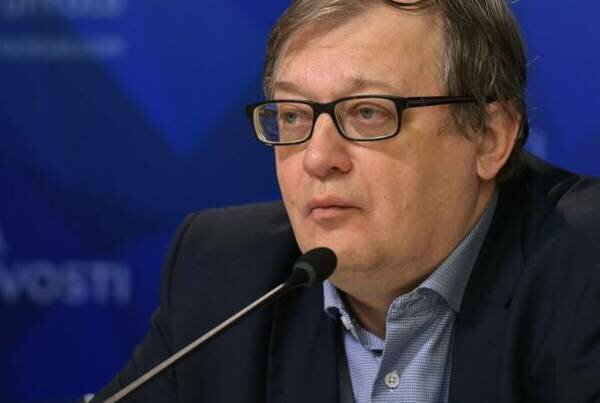
“There can’t be troops without exercises, training and improvement,” he said. “If there are armed forces, then they must continuously train, or else get disbanded. Therefore, from a military perspective alone this is absolutely a normal occurrence. But if we are talking about not one but the cooperation of armed forces of two countries, then moreover there is the need to develop joint military actions with practical training,” Khramchikhin said.
Speaking about the political aspect of the exercises, the analyst noted that even if the drills don’t have any political subtexts all neighboring countries will nevertheless perceive them as the strengthening of the Armenia-Russia military alliance.
“In this case, nevertheless the principle matter is the political aspect. If a unified formation of troops exists, then who is the commander of the formation and what happens during wartime? I don’t know what the specific scenario of the exercises is, but it is obvious that there are no adversaries other than Azerbaijan and Turkey. It’s clear isn’t it that Georgia can’t be Armenia and Russia’s adversary, that’s not serious. Therefore, there’s no one left other than Azerbaijan and Turkey,” Khramchikhin added.
In a broader sense the Armenia-Azerbaijan confrontation – which the allies of Armenia and Azerbaijan touch upon in various ways, fits into a broader regional and geopolitical competition picture where the main actors are the three active parties of the Syrian crisis resolution – Russia, Turkey and Iran, according to Khramchikhin.
According to Khramchikhin, after the 2020 Artsakh war the three abovementioned countries are fighting – overtly or sometimes covertly – for a new alignment of forces in the region, a so-called...
Read full story


